What Is a Soul Dog? Understanding a Bond That Feels One of a Kind
By PetMemorium
- Published:
- Last updated:
A soul dog is an informal, personal way of describing a dog with whom you feel an especially close and distinctive bond. People use soul cat similarly, while soul pet extends the idea to other companion animals. The words describe how a relationship feels; they do not give it a rank or prove a spiritual connection.
You might be reading this with your dog asleep a few feet away. You might have heard someone call their cat their soul pet and wondered what they meant. Or you might be trying to explain why an animal you have lost still feels so woven into your life.
There is no single definition everyone has to follow. At its simplest, the phrase says: there is something about this particular animal, and the life we share, that feels difficult to put into ordinary words.

What do “soul cat” and “soul pet” mean?
The central idea is the same: a relationship that feels deeply personal.
A soul cat does not have to behave like a dog, follow you everywhere, or enjoy being held. The closeness might be in a quiet exchange you recognize, a particular way of approaching you, or the space you have learned to give each other.
Soul pet leaves the species open. The phrase can describe a bond with a dog, a cat, or another companion animal without requiring a different explanation for each.
These words are also used about pets who are still alive. In Kingdom Animal Shelter’s “Soul Cats” reflection, the writer uses the term for a cat still sharing her life. It is not a description reserved for remembrance after a death.
You can recognize a relationship while you are living it. You do not have to lose your pet before finding words for what they mean to you.
What can make a bond feel one of a kind?
Sometimes it is the amount of ordinary life you have learned to share.
Consider an invented example: a person rolls up an exercise mat each morning, and their dog arrives with the same flattened toy. The person takes the toy and puts it on a low shelf for the next day. The dog waits until that small routine is finished before wandering off.
Nothing remarkable happens. Yet the person would notice immediately if a different dog stood there. They know this dog’s timing, the toy they choose, and the way they wait.
Or imagine a cat who gives one short chirp from a lower stair, pauses until their person reaches the landing, and then continues ahead. The person has learned to pause too, leaving the cat room rather than reaching down to pick them up.
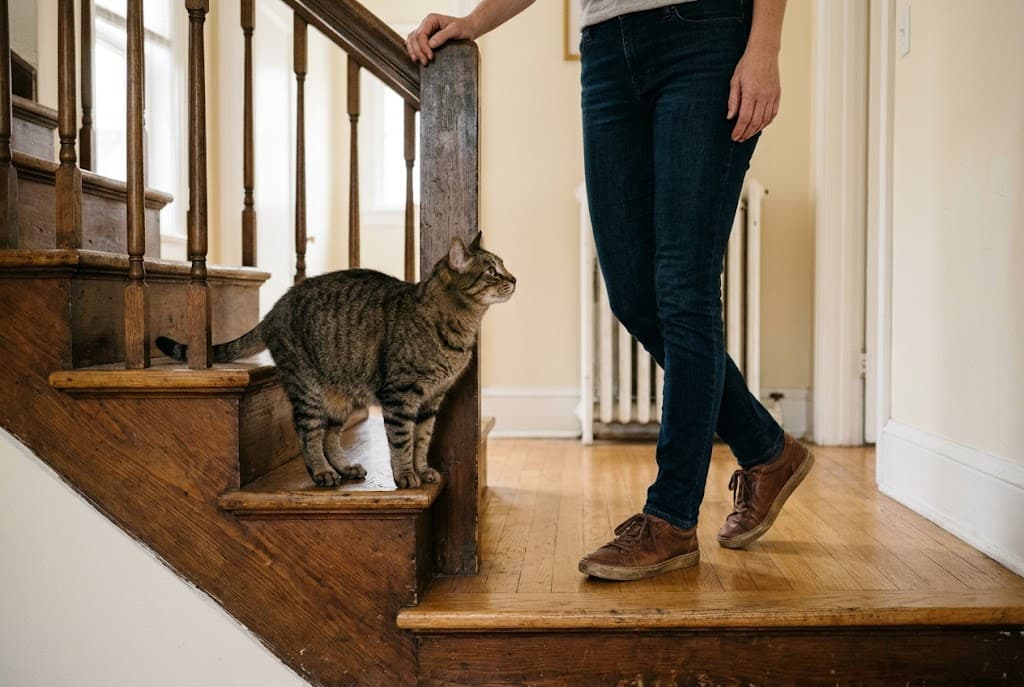
These are illustrative scenes, not accounts of real owners. Your own familiar moments may look nothing like them.
What matters is the specificity. You have learned something about this animal, and your daily life contains small responses to who they are.
That can include the less convenient parts. A dog can be wonderfully familiar and still interrupt a task. A cat can be deeply loved and still have firm opinions about when a hand is welcome.
Closeness does not require an animal to be endlessly agreeable. Sometimes the fondest detail is one you used to sigh about before quietly making room for it.
The relationship can also become attached to a chapter of your life: the apartment where you first lived alone, years of working unusual hours, or a home that changed while the same animal remained part of it.
You do not need a dramatic story to explain that. Repeated ordinary days can give you plenty to recognize.
Does “soul” have to mean a spiritual connection?
No. You can use the word as a metaphor for closeness without making a claim about souls, destiny, or an afterlife.
Someone else may understand the relationship through their faith. That is their interpretation, not something the phrase itself establishes as fact.
It also helps to separate familiarity from certainty about an animal’s thoughts.
You might say, “She always knew exactly what I needed.” What you can describe more precisely is what she did: came nearby, stayed for a while, brought a toy, or settled at the other end of the room while you worked.
The action can matter without proving that your pet understood every reason you were tired or upset.
Likewise, knowing the sound of your shoes does not mean a dog can read your mind. Recognizing a familiar pattern can still feel intimate. There is no need to make it supernatural for it to mean something.
Can you have more than one soul pet?
You do not have to turn a personal expression into a rule about how many animals you are allowed to love.
One relationship may feel especially connected to a particular time in your life. Another may become close in a very different way. You can use the phrase for more than one pet, or decide it does not suit your language at all.
Nor does calling one animal your soul dog make another relationship less worthy. The dog who wanted constant company and the cat who preferred brief visits do not need to compete for the same kind of affection.
A different animal cannot repeat the exact history you shared with someone else. That does not mean there is no room for another meaningful relationship.
If this question comes with guilt about welcoming another dog after a loss, our article on loving a new dog without treating them as a replacement explores that separate concern.
Here, the useful distinction is simple: one of a kind does not have to mean your only chance at closeness.
Why can losing that pet leave so much to miss?
If a pet you think of as your soul dog or soul cat has died, you may be missing the relationship in very specific places.
There is the animal themselves. There is also the part of your day that used to involve them: waiting for their next move, answering a familiar sound, changing what you were doing because you knew what they wanted.
In the imagined morning routine, the missing thing would not be only a toy. It would be the arrival, the waiting, and the small exchange that made the morning feel shared.
That can be difficult to explain to someone who only saw an animal sitting nearby.
Still, the phrase soul pet does not determine how grief should look. Crying often, crying rarely, laughing at an old story, or finding an ordinary day manageable does not settle how much the relationship mattered.
You do not have to make your pain more visible to justify your love.
If your question is about continuing to miss a cat long after the loss, I Still Miss My Cat After a Year stays with that experience in more detail.
How can you keep what made the relationship yours?
Start with something more specific than “we understood each other.”
A useful question is: What did I learn to do differently because I lived with this particular animal?
The answer might be the way you left space, responded to a sound, chose a route, or knew when to stop offering attention. It includes your part in the relationship, not only a list of your pet’s traits.
If your pet is still with you
Notice a familiar exchange the next time it happens naturally.
You could keep a short video with the ordinary seconds before and after the moment, or write down what you noticed later. There is no need to arrange a touching scene or test whether your pet responds in the “right” way.
Let them continue being themselves, including on a day when they would rather sleep.
The purpose is to notice the life you are sharing, not to collect proof that the bond qualifies for a name.
If you are remembering a pet who has died
Choose one broad description and give it a small, truthful story.
Using the invented example from earlier, “You were my morning companion” could become:
“When I rolled up the mat, you brought that flattened toy over. I put it on the shelf for the next morning, and you watched until I did.”
Use only details that belong to your own pet. If you do not remember what happened next, the story can stop where your memory stops.
You do not need to turn it into a polished tribute. A photograph with a plain caption, or a few accurate sentences kept privately, can hold something recognizable.
If you have little or no photographic record, Remembering My Cat Without Photos offers other ways to begin. The underlying principle applies beyond cats: keep what you remember without inventing what is missing.
You can call them your soul dog, your soul cat, your companion, or simply their name.
The phrase can help you tell someone that this relationship mattered. The details tell them who you mean.
Sometimes those details are small enough to miss from the outside: a pause on the stairs, a rolled-up mat, a toy you knew exactly where to put.
You knew the next part of that ordinary moment. You had learned it together.