Remembering My Cat Without Photos: What Can I Keep?
By PetMemorium
- Published:
- Last updated:
Someone asks, “Do you have a picture?”
You reach for your phone, then remember you don’t. Or the pictures were on an old device. Or the few you have are blurred, distant, and nothing like the cat you knew.
There was so much more to them than you managed to photograph.
The pressure of their forehead against your fingers. The pause before a jump. The particular little noise they made when you stopped doing something they wanted you to continue.
If you miss your cat and don’t have photos, you can still begin with those details. Words, your own spoken recollections, familiar objects, and other people’s stories can each hold something a photograph might never have captured.
You don’t need to find a picture before you’re allowed to start remembering.
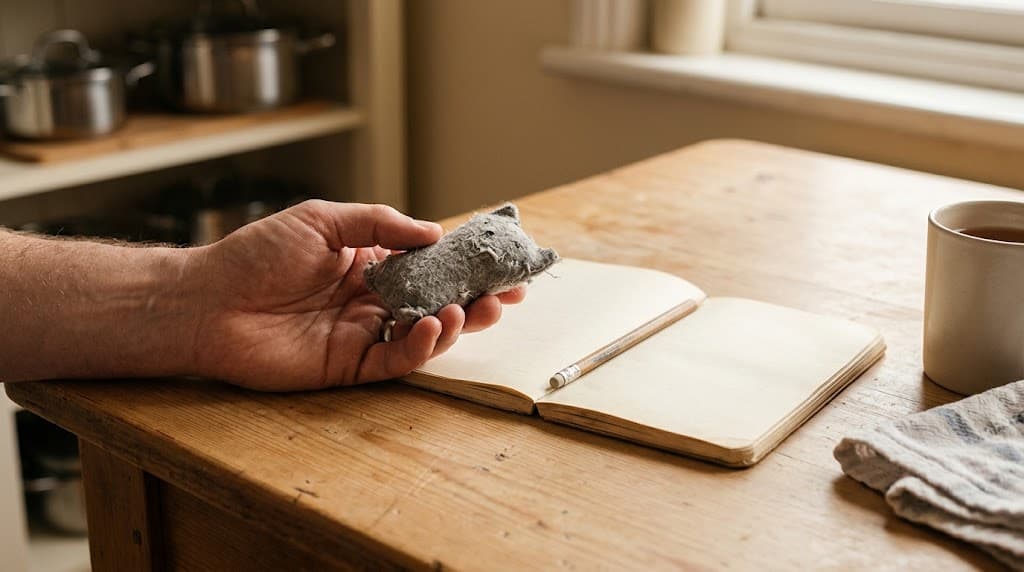
Begin with a word portrait
A word portrait describes your cat through something they actually did. It doesn’t require a polished story or a complete account of their life.
Start with a detail that comes to you readily. You don’t have to begin with their face.
Instead of trying to write “everything about my cat,” choose one small action you could recognize as theirs.
Here is an invented example to show the difference:
She was affectionate.
And:
If I stopped scratching her cheek, she slid her nose underneath my fingers and lifted my hand.
The second description gives you something to return to: a movement, a small request, and your part in the exchange.
Your cat may have asked for affection differently, or rarely asked at all. Use what you remember, rather than borrowing a detail because it sounds sweet.
Follow one movement from beginning to end
Think of a familiar action: investigating a bag, asking for food, getting comfortable, or deciding whether to approach you.
What happened first? Was there a pause? What told you they had finished?
You could describe the way they tested a surface with one paw before stepping onto it, or how they rearranged themselves several times before finally resting. Only choose a sequence you genuinely recall.
A small verb can make a description more useful than a broad label. Nudged. Hovered. Flattened. Reached. Find the word that fits your cat.
Keep the part that involved you
Some memories live in what you learned to do together.
You held the brush at a certain angle. Waited for them to finish sniffing your hand. Left your arm still because moving it would end the visit.
Include that response if you remember it. It helps describe a relationship, not just an animal’s appearance.
How can I keep a sound I never recorded?
Describe what made the sound recognizable, without demanding an exact imitation.
Was it brief or drawn out? Quiet enough that you had to listen for it? Did it arrive before dinner, during play, or when your cat wanted a door opened?
“Her meow was high” may be true. “She gave two short meows, waited, then tried again when I didn’t move” holds another kind of detail.
You can make a recording of yourself telling that memory. It can be as plain as:
I don’t have a recording of him, but I remember this about his voice…
Say what you know, then stop when you reach what you don’t.
Your recording preserves your account of the sound. It isn’t a recording of your cat, and it doesn’t need to pretend to be one. If trying to imitate them feels awkward, leave the imitation out.
The timing, the situation, and what you understood they wanted may be the part you most want to keep.
Let an ordinary object help you remember
An old toy, a brush, a bowl, or a blanket can offer a starting point. You don’t need a special memorial object.
If something familiar remains, look at it and ask a specific question: What did my cat actually do with this?
A toy’s shape tells one story. The way your cat handled it tells another. Did they carry it by one end? Ignore it until you moved it? Abandon it whenever something less expensive became available?
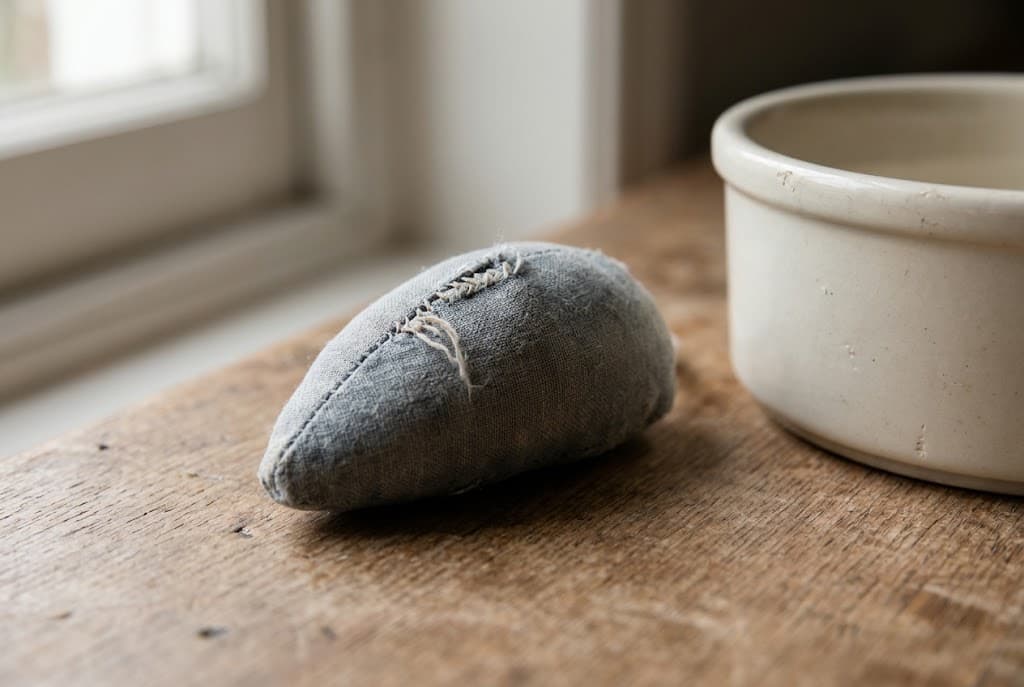
These are possibilities, not a checklist. One true detail is enough.
You could photograph the object now and add a note explaining its connection to your cat. Label it as a photograph taken now, rather than suggesting it records an earlier moment.
And if you no longer have their things, skip this approach. You don’t have to replace them or buy something to make a memory count.
Ask for a story, even when there may be no pictures
Someone else who knew your cat may remember an ordinary encounter you never saw.
Instead of asking only, “Do you have any photos?”, try:
“What do you remember doing with her?”
“Was there something he did when I wasn’t home?”
“Is there a small story about him you still tell?”
Let them answer before offering your own version. An unexpected detail can be more interesting than agreement.
If they’re comfortable with it, save their words or ask permission to record them telling the story. Keep their name beside the account, so it remains clear whose recollection it is.
You don’t need to combine different memories into one definitive version. Your cat had a life with each person who knew them.
What if I can’t remember a detail clearly?
Leave room for uncertainty.
You can write, “I remember a white patch under her chin, but not its exact shape.” Or, “I know he made a sound before jumping up. I can’t describe it now.”
Those sentences still tell the truth.
It can be tempting to make an account feel complete by filling a gap with what cats usually do. But a common cat behavior is not automatically your cat’s behavior.
A sketch or an illustration can also have a place in remembrance, if you want one. Keep it separate from a factual record. An artist’s or AI-generated image cannot establish a marking, expression, or feature you no longer remember.
You are allowed to preserve fragments without turning them into a perfect portrait.
What can I make today?
Choose one small piece of your cat’s life and give it a form you can keep.
Write a short word portrait in a notebook. Record yourself describing one familiar sound. Ask someone for a story. You only need one of these to begin.
Give it a recognizable title, such as “How she asked for another scratch.” Add the date you recorded it. If you don’t know when the remembered moment happened, there’s no need to assign it a date.
For a digital note or recording, keep another copy somewhere you already use and trust. The aim is to make it easy to find again, without creating a complicated project.
If remembering the rooms you shared would help, I Miss My Cat So Much: The Places I Still Look for Them offers a separate place-based exercise.
For now, you can stay with the detail in front of you.
The way they lifted your hand.
The sound they made before trying again.
You may not have a photograph of it. You can still write down what you remember.