I Still Miss My Cat After a Year: The Small Moments That Stay
By PetMemorium
- Published:
- Last updated:
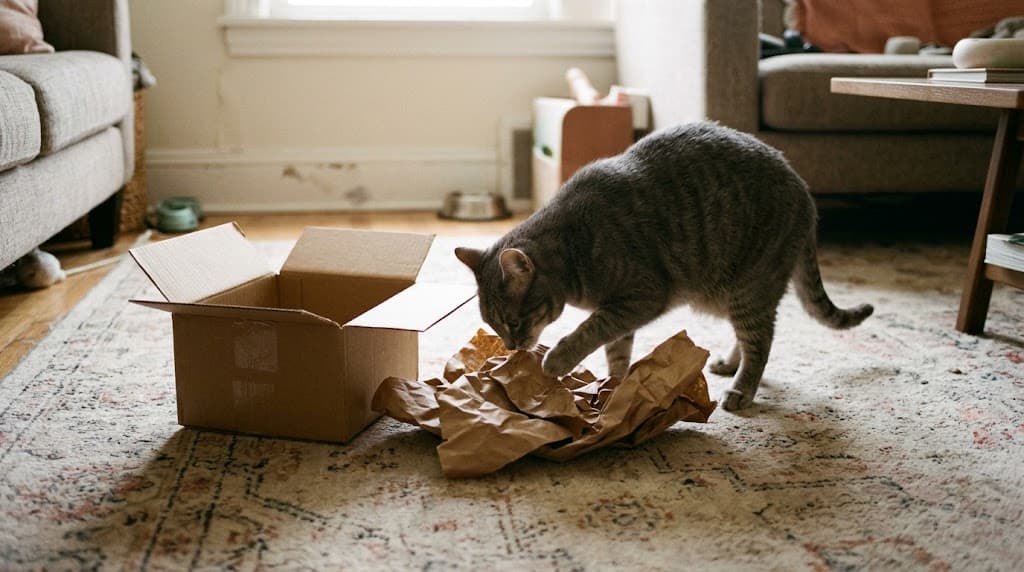
It can happen while you’re opening a delivery.
If your cat used to inspect every parcel, you might still lower the box carefully, leaving the paper inside for them to investigate. For a second, the next part of the afternoon seems obvious.
Then you remember there won’t be an inspection.
Your cat has been gone for a year. Or longer. Long enough that people may have stopped asking how you’re doing. You’ve bought groceries, made plans, laughed at things. Much of your life looks ordinary again.
And an empty cardboard box can still make you miss them.
“I still miss my cat after a year” can hold a question underneath it: Shouldn’t this feel different by now?
Some things probably do feel different. That doesn’t mean every familiar moment has stopped belonging to the life you shared.
Why do I still miss my cat after so much time?
Your cat was part of more than a period in your life. They were part of things you still do.
You still fold laundry. You still open cupboards, change the sheets, and finish work at roughly the same hour. Those ordinary actions may once have included a small exchange with them.
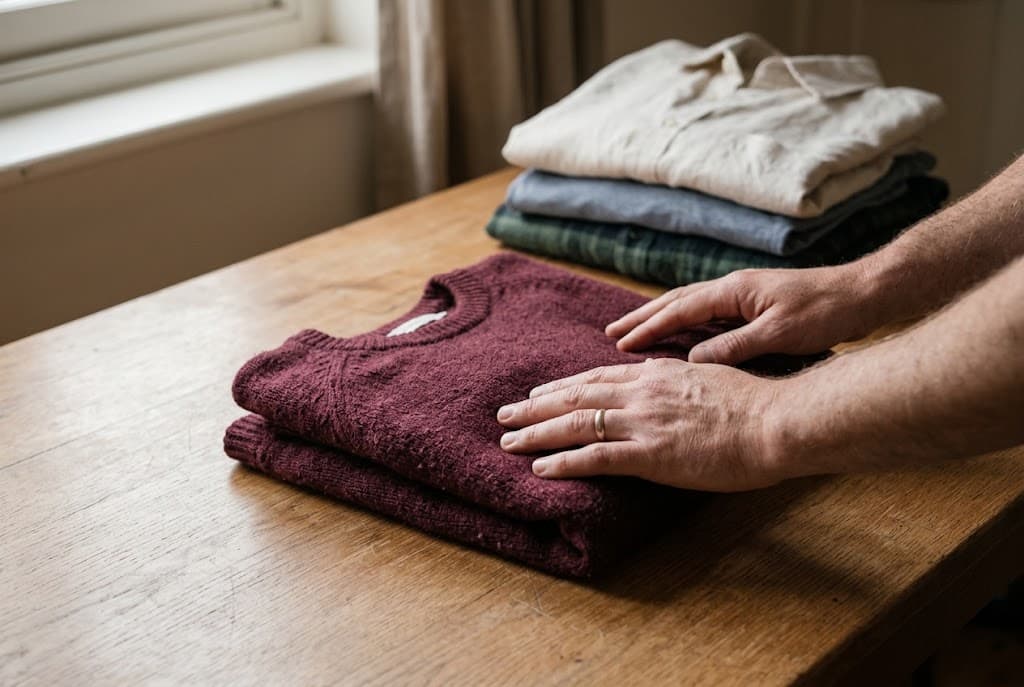
A fresh sheet meant a cat-shaped obstacle before you could tuck in the corners. Folding a sweater meant removing a paw from the sleeve. Turning off a light meant listening for the little sound that told you they hadn’t settled down yet.
These are examples, not things every cat did. Your own reminders may be quieter, stranger, or harder to explain.
The familiar action continues. The familiar response is missing.
That can be enough to bring your cat sharply to mind, even after months when you’ve been getting on with life. You don’t have to turn that moment into a verdict about how well you’re doing.
A year tells you how much time has passed. It cannot tell you how often you should think of someone who shared your days.
Quieter weeks don’t cancel the days when you miss them
There may be a week when your cat hardly comes to mind. Then a sound from someone else’s kitchen catches you, and suddenly you want to hear their particular meow.
You don’t need to make those two experiences agree.
A quiet week doesn’t mean they mattered less. A difficult afternoon doesn’t erase the good week before it. You also don’t have to feel sad whenever you remember them.
You can laugh at the thought of a cat who worked patiently at stealing one noodle, then ignored the rest of the plate. You can remember being exasperated. A ridiculous habit is allowed to remain ridiculous.
Over time, some memories may arrive without the account of losing them attached. You get to spend a moment with what they were like.
There is room for that, too.
What can I do when a reminder interrupts an ordinary day?
Start with what the moment actually needs.
If you’re standing in a store holding a packet that sounds like their treats, you may simply need to put it in your basket—or put it back—and finish shopping. You don’t have to understand the whole feeling in the aisle.
Later, if you want to, name the particular thing you missed.
Not only “I felt sad today,” but “I heard that packet and remembered how quickly you came around the corner.”
That gives the feeling a little context. It also keeps your cat from disappearing inside a general description of loss.
You could tell someone who knew them: “That sound reminded me of her today.” There doesn’t need to be a new development or an anniversary to justify mentioning their name.
And if you don’t want to talk or write, you can continue your day. Remembering doesn’t create an obligation to do something with every memory.
What if other people think I should be over it?
You may find that you want to talk about your cat after the people around you have stopped bringing them up.
Sometimes a specific request makes that conversation easier to begin:
“I’m not looking for advice. I just remembered something funny about him.”
Or:
“I know it’s been a year. I’d still like to talk about her sometimes.”
You don’t have to explain the entire relationship before sharing one story. Nor do you need to persuade everyone to understand it in exactly the same way.
Choose someone who can listen to the small detail you want to tell. The goal can be as modest as saying your cat’s name in a conversation where it is welcome.
A small note about today
If you’d like a way to keep these reminders, try writing a note about the present day rather than another account of the goodbye.
Begin with something happening now that made you think of your cat.
For example, an imaginary note might read:
I opened a package today and left the paper spread out before I thought about it. I remembered the way you used to step onto it, stop, and listen to the crackle. I wished I could hear that little pause in the afternoon again.
Your note might be one sentence. It might describe the first cold evening of the season, a household job you used to do together, or something new you wish they could have been here for.
Keep remembered details separate from wishes. “I remember you doing this” and “I wish you were here today” can sit beside each other without becoming the same kind of statement.
There’s no need to write as though your cat is answering. You’re giving your own memory somewhere to go.
Date the note when you write it. If another reminder comes months later, it can have its own page. This doesn’t need to become a daily practice.
How can I carry these memories into a life that keeps changing?
You may move, change jobs, welcome another animal, or discover that a once-painful routine has become ordinary again.
You can keep something specific about your cat without keeping your whole life arranged around their absence.
A small collection of notes can help: funny stories, remembered habits, a few words about something that brought them to mind. It doesn’t need to become a complete biography.
If familiar rooms are where you notice their absence most, our article I Miss My Cat So Much: The Places I Still Look for Them offers a different way to record those details.
A notebook or a private document can be enough, too. Choose somewhere you would actually want to return.
You can break down the delivery box and put it out for recycling.
You can also keep the memory of the cat who would have interrupted the job.
Both can belong to the same afternoon.