Feeling Guilty About Getting a New Dog After Losing One?
By PetMemorium
- Published:
- Last updated:
Suppose a new dog does something wonderfully silly. They pounce on a toy, miss it completely, and look surprised by the result. You laugh.
Then, almost before the laugh is over, you think about the dog who died.
How can I be enjoying this? Does this mean I’m moving on from them?
If you are feeling guilty about getting a new dog after losing one, the difficult part may not be deciding whether you could love another dog. It may be wondering what that love would mean about the first.
Welcoming another dog does not require you to declare the earlier relationship finished. You can miss the dog you lost and become curious about the dog in front of you. Neither feeling has to cancel the other.
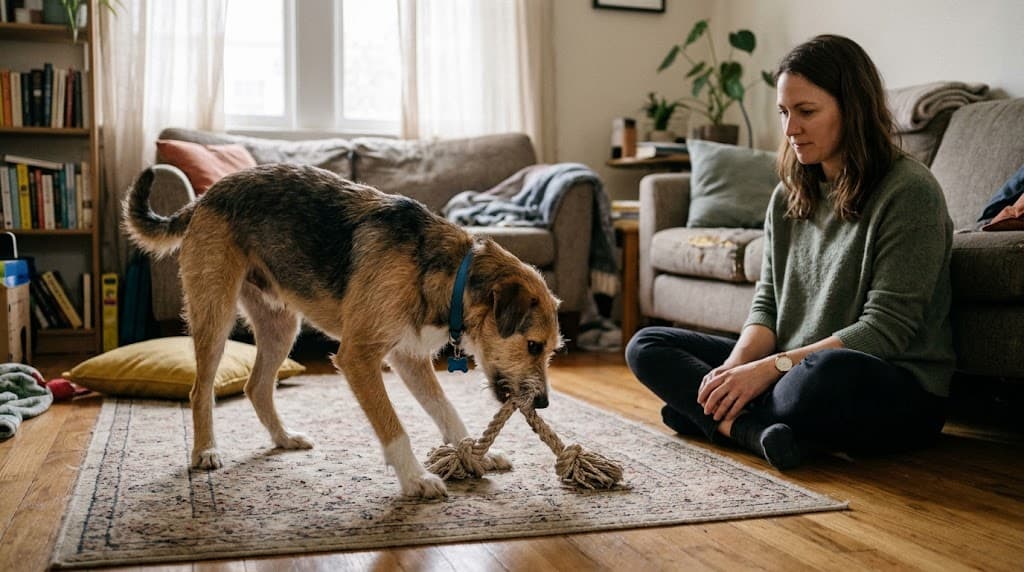
Am I replacing the dog I lost?
“Replacement” suggests that one dog could fill exactly the same place as another. But the details of a shared life are not interchangeable.
One dog leaned against your knees while you cooked. Another waits at a distance, watching for something to fall. One loved every visitor. Another needs a quieter introduction. Even the way they ask you to throw a toy will be their own.
You do not have to make those differences feel comforting immediately. Some may catch you off guard.
Try changing the question from Can this dog fill the space? to Who is this dog, and what might life together become?
That leaves room for a new relationship without asking it to reproduce an old one.
Give the new dog a life that belongs to them
Comparison can slip into ordinary decisions: where the bed should go, which walk to take, whether a certain toy is “the right one.”
When that happens, make one small choice based on the new dog’s actual response.
If they ignore the old favorite toy, put it aside rather than repeatedly offering it. If they enjoy a different route, explore it together. Use their name, including when you catch yourself reaching for the familiar one.
You can keep a particular belonging for the dog who died. Everything does not have to be passed on, and everything does not have to be put away.
A useful intention while you get acquainted might be:
I will notice one thing this dog enjoys without measuring it against what my other dog enjoyed.
That is not a test of your love. It is a way to pay attention to someone new.
What if I’m not sure I’m ready?
You do not owe anyone a particular waiting period—or another dog at all.
Separate the question of loyalty from the practical question of care. Are you willing and able to make room for this dog’s walks, expenses, attention, and needs, including the parts that will differ from your previous life?
If you are still deciding, you can ask about the individual dog and what caring for them would involve without making a commitment that day. You can also decide that you do not want another dog.
If a dog has already joined your home, you do not have to feel instantly close. Start with dependable care and opportunities to get acquainted. There is no need to force a familiar feeling on the first evening.
Keep something of the old relationship without making the new dog carry it
You might want to say the old dog’s name, tell a favorite story, or keep one object that belongs specifically to that relationship.
You can do those things without asking the new dog to participate. They do not need to sleep in the same spot, enjoy the same games, or somehow reassure you that bringing them home was acceptable.
If you want somewhere to begin remembering, this article about missing the little things about your dog offers ways to record ordinary details.
Remembering the dog who died and learning about the new dog can be separate activities. They do not have to compete for the same moment.
You do not have to defend the timing
Other people may have opinions about whether you waited too long or not long enough. You do not have to turn a personal decision into a public argument.
A short answer can be enough:
“We still miss them. We’re getting to know this dog as someone different.”
You can also ask people not to call the new dog a replacement. There is no need to promise that everything feels easy simply because you chose to welcome them.
The next time you enjoy something the new dog does, you do not have to immediately prove that you still remember the other one.
You can remember them later that evening. You can say their name. And you can return to the living dog beside you, still learning which games they like and how they ask for your attention.
There is something new to discover. There is something old worth keeping.