Signs Your Deceased Pet Is Visiting You? What Those Moments May Mean
By PetMemorium
- Published:
- Last updated:
Searching for signs your deceased pet is visiting you may begin with something small: a sound from another room, a sudden feeling of company, or a coincidence that arrives when you are thinking about them.
For a moment, the distance between the life you remember and the room you are standing in seems very small.
A familiar sound, a feeling of presence, or a coincidence is not, by itself, proof that a deceased pet is visiting. The research discussed here records people’s experiences and interpretations; it does not verify contact with a pet’s spirit.
But uncertainty about what caused a moment does not erase what it felt like. You can find it comforting, painful, puzzling—or several things at once—without being required to settle its meaning immediately.
When a familiar sound stops you in your tracks
Your pet’s sounds once belonged to particular parts of the day. The click of tags could mean someone was getting up. A short call from the kitchen could mean you had taken too long with dinner.
You knew more than the noise. You knew what usually came next.
Consider two imagined examples. Someone hears a light tapping in the hallway and turns toward the place their dog used to appear. Someone else pauses before moving a chair because, for an instant, they feel as though their cat is behind it.
These are illustrative scenes, not accounts from real owners.
Years of shared routines give that recognition a personal context. They do not tell us what caused a particular sound or sensation. Recognizing something as familiar and identifying its source are different questions.
You can describe the experience carefully: “It sounded like his tags,” or “For a moment, I felt as though she was nearby.” Those sentences preserve what you experienced without claiming more than you know.
If the experience happened in sleep, our article about dreaming of a deceased pet explores that separate situation.

What research can—and cannot—tell us
A 2024 study by Jennifer Golbeck examined social-media accounts from people whose dogs had died. The accounts included sensory experiences and events people interpreted as signs. The study explored those reports and their emotional meaning—not objective evidence that a dog’s spirit had returned. Read the published abstract.
The University of Maryland’s account of the research explains that responses followed a social-media invitation to share such experiences. That matters: people who chose to respond are not a representative sample of everyone who has lost a pet. Their accounts cannot tell us how often all bereaved owners experience something similar.
The study also concerned dogs. Its findings should not be presented as a measured rate for cat owners or all companion animals.
Research can document what people report and examine how they understand it. That is different from establishing the source of a sound, explaining every individual experience, or confirming an afterlife.
Can a coincidence mean something without proving a visit?
It can have personal meaning without becoming evidence of a message.
A bird at the window might feel unexpectedly significant on a day when you are thinking about your pet. The moment may bring back an afternoon, a familiar habit, or the feeling of sharing a quiet room.
You can keep that association without needing to identify the bird as a messenger.
People bring different religious, cultural, and personal understandings to experiences like these. One person may hold a spiritual interpretation. Another may understand the moment through memory. Someone else may remain unsure.
Respecting those differences does not require an article to declare one interpretation scientifically established.
The Rainbow Bridge story offers a related distinction: an image can carry affection or hope without becoming a verified description of what happens after death.
If you want to tell someone about your moment, you could say:
“I don’t know what caused it. It reminded me of her, and I’d like to tell you about it.”
You can ask to be heard without asking another person to agree with every possible explanation.
If you never feel their presence
You do not need an unusual experience to demonstrate that your relationship mattered.
Someone else’s story about a sign does not create a test your own pet has to pass. A quiet room is not evidence that you were loved less. An uneventful day is not a verdict on the bond you shared.
There is no experience you must produce before you can remember your pet, say their name, or feel close to a familiar story.
You also do not owe your attention to a search for signs. You can close a discussion that leaves you comparing experiences, or stop looking for meaning in every sound and coincidence.
The life you shared already happened. It does not need another event to make it count.
Keep the experience, the interpretation, and the memory distinct
If a moment brings back something you want to keep, a private note can leave room for both meaning and uncertainty.
It helps to separate what you experienced today, what you think it might mean, and what you genuinely remember from your pet’s life.
Here is a completely fictional example:
Today’s experience: I thought I heard two light taps near the kitchen cupboard.
My interpretation: For a moment, it felt as though Milo was waiting for dinner with me. I don’t know what caused the sound.
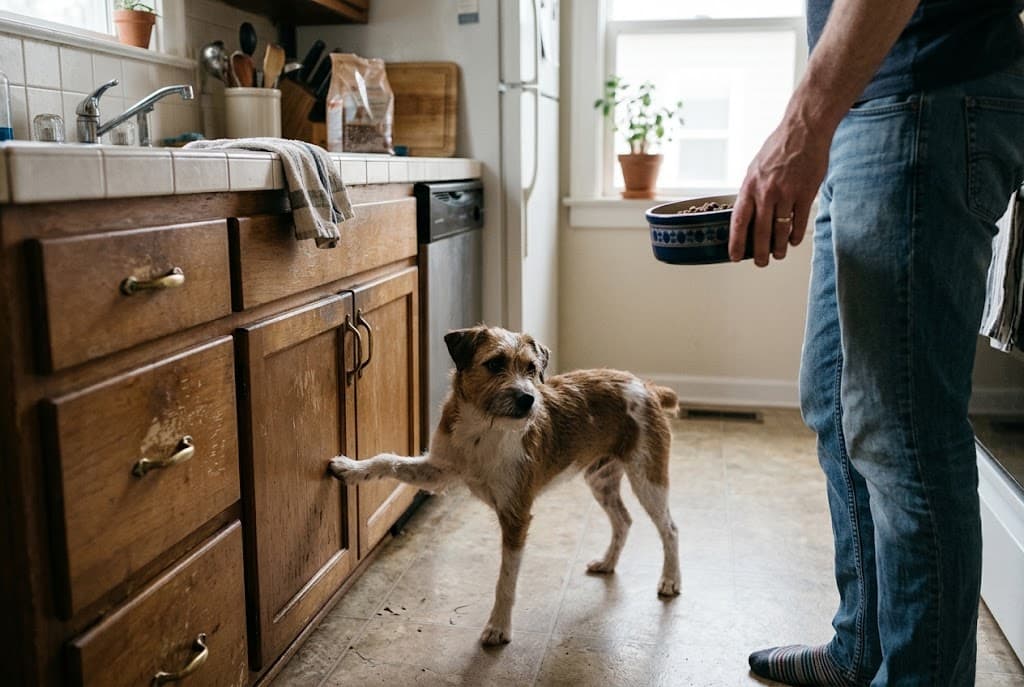
What I remember from his life: Milo sometimes tapped the lower cupboard door with a paw while I prepared his dinner.
The first part records an experience. The second records a feeling and an interpretation. The third belongs in a real-life memory record only if the person independently remembers that behavior.
There is no need to turn the whole moment into a certain account of a visit. Nor must you force it to produce a memory. If nothing specific comes back, the note can remain unfinished—or unwritten.
For a fuller guide to preserving ordinary details, How to Keep Your Pet’s Memory Alive focuses on the practical recording process.
If the feeling is unsettling
Not every experience feels reassuring, and you do not have to reinterpret an upsetting moment as a gift.
A systematic review of continuing bonds after pet loss found varied effects, including supportive experiences and experiences associated with intensified grief. It does not support a promise that maintaining a sense of connection will always feel helpful. Read the review.
You can tell someone you trust what happened without deciding its cause first. Plain language is enough: “I had an experience that unsettled me, and I don’t want to sit with it alone.”
If these experiences frighten you, disrupt sleep, or make daily life difficult, speak with a qualified health professional. An article cannot assess their cause or determine whether they need medical attention.
For the ordinary demands of the day, How to Cope With Pet Loss offers practical ways to reduce tasks and ask for company. AI companionship is not a substitute for professional support.
The life you shared does not need another sign
You may keep a spiritual interpretation. You may understand a moment through memory. You may never decide exactly what to call it.
There is still something you know: your pet had particular ways of sharing a day with you.
They waited, interrupted, asked, wandered off, and returned. You learned their timing. You made room.
A sound may bring that life close for an instant. You can acknowledge the feeling without requiring it to settle what happens after death.
And if the room stays quiet, the life you remember is still yours.