How to Cope With Pet Loss, One Ordinary Day at a Time
By PetMemorium
- Published:
- Last updated:
There are still dishes in the sink.
A message needs answering. Someone wants to know whether you will be at work tomorrow. The refrigerator contains ingredients for a dinner you no longer feel like making.
Your pet has died, and the ordinary world keeps presenting you with ordinary things to do.
That can be a difficult part of losing them: not only the absence, but having to decide what happens next while carrying it.
If you are wondering how to cope with pet loss, you do not need a plan for the rest of your life today. Begin with a smaller question:
What would make this particular day a little more manageable?
The answer does not have to make you feel better about what happened. It can simply help you get through lunch, answer one message, or ask someone to come over.

What does coping with pet loss mean today?
Coping does not have to mean accepting everything, finding a lesson, or reaching a point where you no longer cry.
For today, it can mean taking care of what cannot wait and allowing something else to wait.
Look at what is actually in front of you. Is there food you can eat without much preparation? Does another animal need care? Is there one appointment or responsibility that someone needs to know you cannot manage?
Choose what genuinely needs your attention. Not what would make you look as though you are handling everything well.
A useful question is:
If I could only manage a few things today, which ones would matter most?
An imaginary answer might be: eat something simple, arrange care for the other dog, and tell work you need a quieter day. Yours may be entirely different.
Leave room around those things. This is not a new routine you have to maintain perfectly.
Make the necessary tasks less demanding
Some tasks come with your pet’s name attached: a delivery reminder, an appointment notification, a message from someone who does not yet know.
You do not have to respond to each one personally or all at once.
If you want help, ask someone to handle a defined task rather than the whole situation. For example:
“Could you contact the groomer and cancel the appointment? I don’t want to explain it again today.”
Or:
“Could you help me make a list of the messages that need answering? I’ll decide which ones to send.”
Keep choices that matter to you. Getting help does not mean handing over every decision.
For a message you must write yourself, plain language is enough:
“My pet died recently. I’m having a difficult time and need to postpone this.”
You do not owe a detailed account to everyone who needs a practical answer.
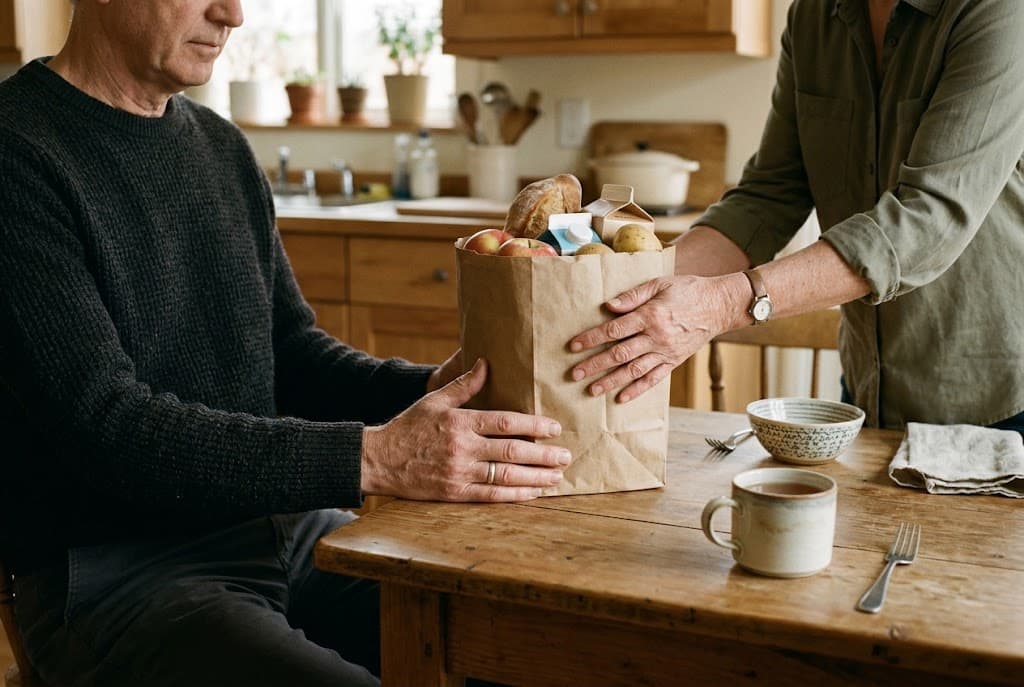
You do not have to make every decision about their things
A bed, a bowl, a bag of food, a blanket caught beneath a chair: familiar objects can suddenly seem to demand decisions.
They do not all need one today.
You can leave something where it is, move it out of sight temporarily, or ask someone to put it somewhere safe without sorting it. “Keep this, but not here for now” is a complete instruction.
If someone is helping at home, be specific about what should remain untouched.
“Please leave the basket alone. Help with the laundry would be wonderful.”
There is no need to clear a room to prove that you are moving forward. There is also no need to keep it unchanged to prove that you remember.
Choose what makes the space possible to live in today. A permanent decision can wait.
Ask for the kind of company you actually want
People may offer sympathy without knowing what would help. You can make the request smaller and clearer.
“Could you sit with me while I eat?”
“I’d like to talk about her, but not about the last day.”
“Can we watch something ordinary? I don’t want to explain how I’m doing.”
You are allowed to want different things on different days.
If someone answers with advice you do not need, you can redirect the conversation: “I’m not looking for a solution right now. I’d just like you to listen.”
And if one person cannot offer that kind of company, you can choose someone else. You do not need to convince everyone to understand your relationship before receiving a little support.
Keep remembering separate from another task you must finish
There may be pressure—from yourself or elsewhere—to make something meaningful immediately. A tribute, an album, a beautiful account of your pet’s life.
You can leave that unfinished.
When you do want to remember, begin with something small and true. A nickname. The way they asked you to move over. An inconvenient habit that still makes you smile.
You do not have to describe their whole life or return to the circumstances of their death.
If you would rather spend time with those ordinary details, our articles about missing a dog and missing a cat offer separate ways to begin.
What about the days when life starts to feel ordinary again?
You might finish a task without thinking about your pet. Enjoy lunch with someone. Become absorbed in a film.
You do not need to interrupt those moments to demonstrate that you still care.
Nor does a difficult evening mean the easier afternoon was false.
You can continue making room for your pet’s name while also making room for the life in front of you. That does not require a grand declaration about moving on.
If taking care of yourself or getting through ordinary responsibilities continues to feel unmanageable, you can ask a qualified professional for individual support. This article is a collection of everyday suggestions, not a treatment plan.
For now, return to the smaller question.
What needs to happen before the day is over? What can wait? Who could make one thing easier?
The dishes do not all have to be done.
You can choose something simple to eat, send the message that matters, and leave the rest for tomorrow.