How to Keep Your Pet’s Memory Alive: The Little Things You Never Want to Forget
By PetMemorium
- Published:
- Last updated:
You can have hundreds of pictures of your pet and still find yourself trying to explain something the pictures don’t show.
The order of their greeting. The noise they made before a familiar request. What happened after the moment the camera caught.
Those details belong to the life you shared, too.
To keep your pet’s memory alive, begin with one real moment. Write down what happened, how your pet moved or sounded, and what you did in response. Save those few lines with a relevant photo or video—or on their own.
You can begin while your pet is still beside you, recording the ordinary things you know so well. You can also begin after they have died, working gently with the memories and materials you already have. Neither requires a complete life story.
Start with one moment you recognize
“Playful,” “gentle,” and “stubborn” may all be true. But they don’t tell someone what living with your particular pet was like.
Try starting with an unfinished sentence:
When I did this, they would…
Choose something small: finishing a meal, taking off your shoes, sitting down to work. Then remember what your pet actually did—not what a dog or cat generally might do.
The everyday scenes in this article are invented examples, offered to help you recall your own experiences. They are not stories about real owners.
For instance, a cat might wait until someone closed a laptop before standing up, stretching, and walking toward the bedroom. The useful detail isn’t simply that the cat enjoyed company. It’s the familiar sequence between those two lives.
If your pet is living, notice one routine as it happens. You don’t need to stage a special moment or interrupt what they are doing.
If your pet has died, choose a moment that comes back readily. You don’t have to begin with the day they died, or with the memory that feels hardest to approach.
Write the sequence, including your part in it
A useful memory record gives a small scene room to unfold.
What happened just before your pet responded? What did they do first? What did you do next?
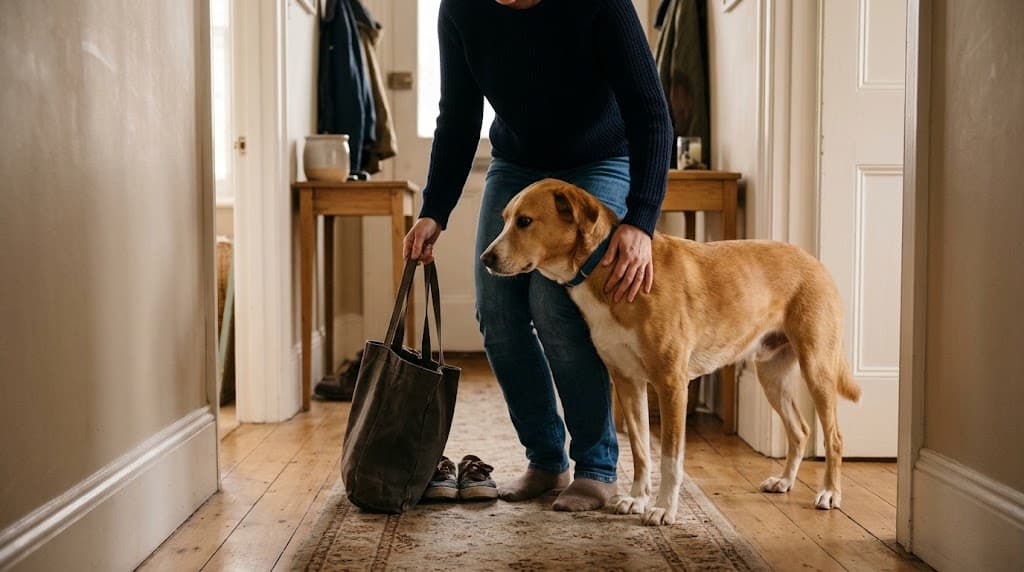
For a homecoming, that might mean describing where your dog appeared from, whether they approached at once or paused, and how the greeting ended. Your response matters: perhaps you crouched, set down your bag, or waited while they made their usual inspection.
Sounds can belong in the same scene. Instead of “a funny meow,” describe what you remember hearing and when: a short sound before a request, a longer one when you took too long. If you don’t remember the pitch, don’t supply one.
Preferences become clearer with context, too. A toy’s color says less than what your pet did with it. A sleeping spot becomes more recognizable when you remember when they chose it, how they settled, or whether their preferences changed as they grew older.
You don’t need all these details in every note. Keep the ones that genuinely belong to that moment.
And leave room for variation. “Often, when we lived in that apartment” can be more truthful than “always.”
Let photos and videos prompt memories—not fill in the blanks
Choose one photograph and look at it before trying to describe everything you remember.
Separate two things:
- What the image shows: a toy beside your pet, a particular room, someone’s hand.
- What you remember beyond the frame: how the toy got there, what happened next, why that afternoon mattered.
Both can belong in your record. They simply come from different places.
A video may preserve a movement or sound you had forgotten. It may also show only the end of a familiar routine. Describe that distinction rather than treating a short clip as a record of every day.
A photo of your pet beside a bowl doesn’t, by itself, establish their favorite food. A relaxed-looking pose doesn’t tell you exactly what they were feeling. Add what you truly know without asking the image to prove more than it can.
If you have few or no pictures, your memories still give you a starting point. Our guide to remembering a cat without photos explores ways to begin with words and everyday details.
What one finished memory record can look like
Here is a completely fictional example. Use its approach, not its details.
Nell’s hallway hello
When: Our first apartment, roughly 2018–2019. I don’t remember an exact day.
When I came home from work, Nell often trotted in from the living room, made a small circle near the doormat, and stopped beside my left knee. Then she leaned her shoulder against my shin. I would put down my bag and crouch beside her.
I remember the light tapping of her tags as she turned, though I couldn’t accurately imitate the sound now.
What I still have: A short, silent clip showing Nell beside the hallway runner as I lower my hand. It doesn’t show the whole greeting. The rest of this account comes from my own recollection.
What I’m unsure about: I associate a toy with some homecomings, but I can’t clearly place it in this routine, so I’m leaving that detail out.
The note doesn’t describe Nell’s whole personality. It preserves one recognizable exchange, along with the limits of the record.
When you make your own note, include the day you write it. Keep that separate from when the event happened. If the event date is unclear, a life period—“before we moved,” or “during her later years”—may be enough.
Give the records a home you can find again
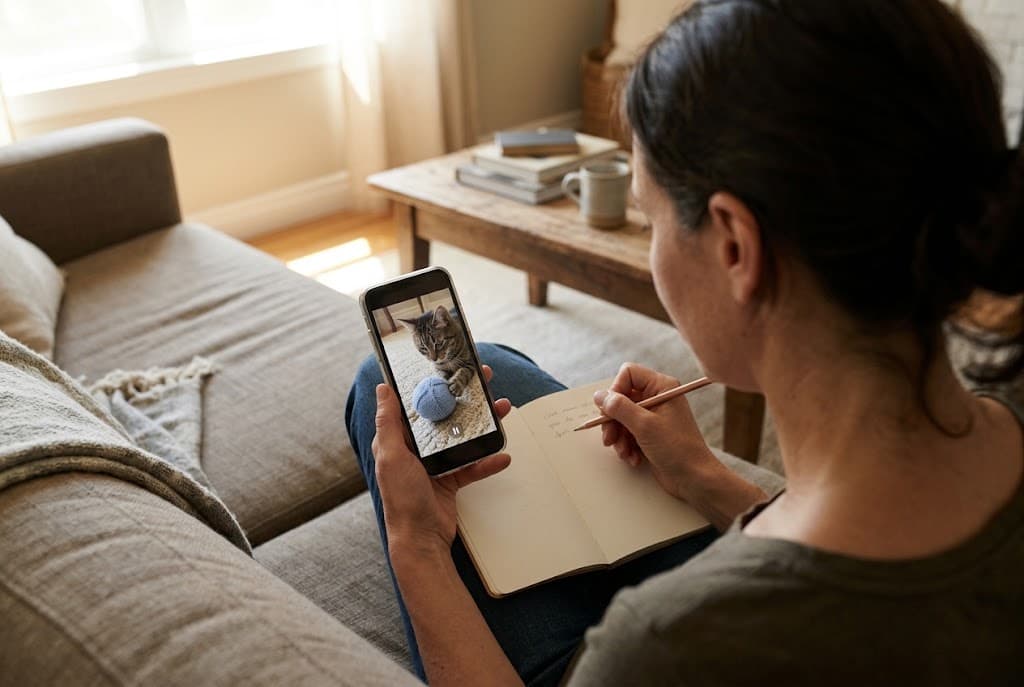
A single note on your phone, a document, or a paper notebook can be enough to begin. Choose something you already find easy to use.
Give each entry a recognizable name: “Nell’s hallway hello” is easier to find than “Memory 4.” Keep a relevant photo or clip beside the note, or write down where it is stored.
As the collection grows, a few loose groups may help: greetings, requests, play, rest, and days you spent together. These are possibilities, not boxes you have to fill.
Keep different periods of your pet’s life distinct. A habit from puppyhood and a quieter routine from later years can both be true. One doesn’t need to replace the other.
For digital photos, the Library of Congress recommends descriptive names, short descriptions, organized folders, and copies stored in separate places. Those are useful habits for the files accompanying your notes, too. They are practical safeguards, not a promise of permanent preservation. Library of Congress: Keeping Personal Digital Photographs
These small records can stay as they are. If you later want to connect memories about your dog into a longer piece, our guide to writing a personal tribute takes that next step.
Let other people add their memories without replacing yours
When you want to share, you can begin with one small question rather than asking someone to remember everything.
“Do you remember what she did when we finished dinner?”
Give them room to answer before offering your own version. They may remember a different part of the same routine—or an entirely different moment.
Keep their contribution in their own words when possible, with their permission. A simple label such as “Dad remembers…” preserves who told the story. If your recollections differ, you can keep both accounts without forcing them into one certain version.
You can also decide which memories remain private. Collecting them doesn’t create an obligation to post them, explain them, or share them before you are ready.
And if you prefer to do this alone, the record is no less worthwhile.
One honest detail is a place to begin
You don’t need to capture everything today. Nor do you need to turn every memory into polished writing.
Choose one ordinary moment. Describe the part you know. Add a photograph if it helps, a sound if you remember it, and an honest gap where something is unclear.
The result may be only a few lines. But they can say something a picture or a broad description cannot: this is what it was like to share a small part of the day with this particular pet.
The pause. The familiar movement. Your part in the exchange.
That is already something worth keeping.