How to Write a Letter to a Pet Who Passed Away
By PetMemorium
- Published:
- Last updated:
There are still things you want to tell them.
Something that happened today. A familiar habit you suddenly remembered. A thank-you that never needed saying when they were beside you, but feels important now.
A letter gives those words somewhere to go on the page. You can address your pet by name, describe one real moment, and say what you miss or wish you could tell them. It does not have to explain their whole life, and it does not have to end with goodbye.
If you don’t know how to write a letter to a pet who passed away, begin with the way you used to speak to them. A name and one honest sentence are enough to start.

Begin with their name, not the perfect opening
Write the name you actually used at home. Their everyday name, an affectionate nickname, or the ridiculous variation that somehow became permanent.
Then tell them something.
Here are two invented opening lines—not words you need to borrow:
Dear [Name], something happened today that I wanted to tell you about.
Dear [Name], I keep thinking about the way you used to wait for me.
You can be plainer still: I miss you. I don’t know what else to write yet.
A letter to your cat, dog, or another pet can sound like the conversations you had at home. You don’t need to explain a nickname or provide background for someone who has never met them.
A tribute can also speak directly to a pet. The emphasis here is different: you are making room for what you want to say to them now, rather than arranging their life into a story for a reader. If that longer form is what you want, our guide to writing a tribute to your dog explores it separately.
Cornell’s pet-loss resources include writing a letter among the ways someone might remember a pet, including expressing feelings and things left unsaid. It is an option you can choose, not a task you have to complete. Cornell University College of Veterinary Medicine
Let one real moment lead into what you want to say
You don’t need to collect your best memories before writing. Start with the one that has already come to mind.
Describe what happened, then follow the thought it brings with it.
A remembered action might lead to something you miss. A small inconvenience might lead to gratitude. An ordinary day might remind you of something you never thought to thank your pet for.
Stay close to your own experience. What did they actually do? What did you do in response? What do you want to tell them about that moment now?
Your letter can include affection without making your pet flawless. You can remember the impatience, the stubborn preferences, or the interruption that was annoying at the time. Those details may be part of why the page feels familiar.
If memories are difficult to gather, How to Keep Your Pet’s Memory Alive offers a separate way to record real details. You don’t have to turn your letter into that kind of record, though. The memory is material for what you want to say.
There may also be regret.
You can write I wish I had… without forcing the next sentence to resolve it. You can name something you wish had been different without making the letter a verdict about your whole relationship.
You don’t have to supply forgiveness on your pet’s behalf. Nor do you need to invent an answer to a question you cannot settle.
A letter can hold a thought such as I wish we had had more time and leave it there.
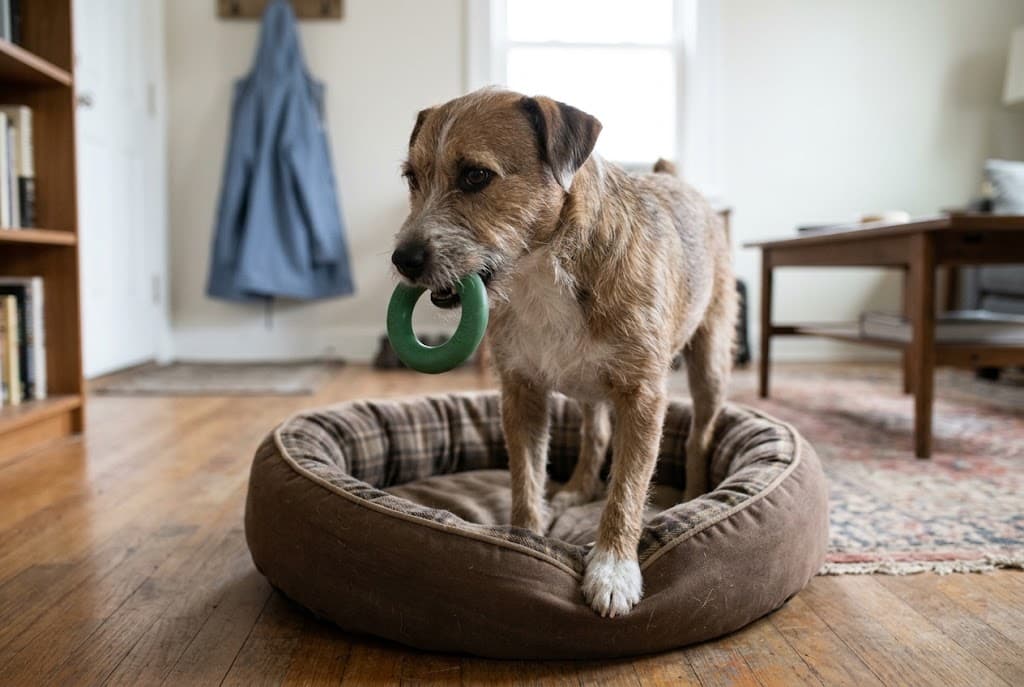
An original example: a letter to Mabel
The following letter is a completely fictional writing example. Mabel and these events are invented. This is not a customer’s letter or the author’s personal experience.
Dear Mabel,
It rained this morning. I pulled the blue coat off its hook and, for a moment, waited for you to get out of your bed.
You used to bring the green ring as far as the door, then leave it beside my shoes when I picked up your leash. It stayed there until we came home. I never understood why the ring needed to come that far, but I liked finding it at our feet.
If I took too long, you sometimes picked it up again and let it fall. I miss that little complaint. I miss having someone waiting while I searched for the things I had just put down.
The gate downstairs is green now. I would have told you about it on our walk. I have no idea whether you would have noticed the change. I would have told you anyway. That is another thing I miss: saying unimportant things out loud while you walked beside me.
Thank you for the company on all those trips that were too ordinary to call outings. We were only going around the block, or taking the same path again. I didn’t think to thank you for an ordinary Wednesday.
I’m sorry for the mornings when I sounded cross because I was running late. I wish I had lingered longer on some walks instead of checking the time. I don’t have a neat ending to that thought yet.
But I don’t want this letter to contain only what I wish I had done differently. There were mornings when we had nowhere else to be. There were walks I made longer because you were still interested. I want to remember those, too.
I’m not writing goodbye tonight. I wanted to tell you about the rain, and the gate, and how strange it is to put on that coat without waiting for you.
I miss you, Mabel. I’m glad there were so many ordinary Wednesdays with you in them.
Love,
Me
Make it your letter, not Mabel’s life with another name
Put the example aside before writing your own.
You may have no raincoat, no ring, and no shared walks. Your letter might begin with a cat’s particular way of approaching you, a sound from another room, or a quiet moment that would need too much explanation anywhere else.
Choose what actually belongs to your pet. Don’t import a touching detail because it works in someone else’s writing.
You can also remove whole kinds of content. If you don’t want to write about regret, leave it out. If gratitude is all you have today, write that. If you want to tell your pet something about your life now, the letter can begin in the present.
Read a few sentences aloud. Do they sound like you speaking to them? Change a formal phrase if you would never have used it at home. Leave an unfinished thought unfinished if completing it would mean saying something you don’t mean.
End for today without forcing a final goodbye
A letter needs a place to stop. It doesn’t need to settle everything.
You might finish by thanking your pet for something specific, naming a memory you want to keep, or simply saying that this is all you can write today.
That’s what I wanted to tell you tonight.
That is an invented example of an ending, not a required closing line. Yours can be more ordinary, more affectionate, or only your name beneath theirs.
You can write “Love,” use a familiar sign-off, or leave the page without one. You don’t have to promise that you will feel differently tomorrow.
And you don’t have to call the letter finished before putting it down.
Keep it privately, or return another day
Fold the paper into an envelope, leave it in a notebook, or save a digital copy with a name and date you will recognize. The date can simply mark when you wrote it; it does not have to be an anniversary.
There is no requirement to post the letter, read it aloud to anyone, or decide now whether you will ever reread it.
If you later choose to share it, you can share only part. The rest can remain yours.
If writing feels like more than you want to do today, you can stop before the first sentence. You are not missing a deadline. For help with the ordinary demands of a difficult day, How to Cope With Pet Loss offers practical suggestions beyond writing.
Your letter can wait until there is something you want to say.
And when that moment comes, it does not have to begin with a beautiful account of your pet’s life.
It can begin with their name.
Then the small thing you wanted to tell them.