Is There an App to Talk to a Pet That Passed Away?
By PetMemorium
- Published:
- Last updated:
Yes. PetMemorium offers a browser-based AI companion you can write to, shaped by your dog’s or cat’s basic identity and the real memories you choose to provide. You do not need to download an app or know how to code.
That is different from communicating with your pet after death. The replies are generated by AI. They are not messages from your pet, evidence of their presence, or a way to bring them back.
You may be looking for something quieter than those promises: somewhere to type an ordinary sentence you would once have said across the room. Something about your day. An invitation to sit nearby.
Before trying that experience, it helps to understand what the technology actually offers—and where the familiar details come from.

What can an AI pet conversation actually do?
A memory-based AI companion uses information you supply to help shape a generated interaction. Your pet’s name provides a beginning. A relevant, confirmed memory can make that interaction more individual.
PetMemorium’s chat is a text experience. Its replies focus on pet-like behavior described in words, sometimes accompanied by a few very short, simple words. A movement described in parentheses is still writing, not a video of your pet moving.
The aim is not a long conversation with a human character wearing your dog’s name. Nor should you expect the companion to write speeches about your grief or tell you what your pet would have wanted.
There are important limits. This is not your pet’s original voice, a video call, or a service for receiving authentic letters from them. PetMemorium does not offer voice cloning or automatic memorial-letter generation and export.
An AI reply also cannot establish a fact you have forgotten. If it describes something touching, that does not prove your pet once did it. Your own confirmed memories remain the basis for claims about their life.
Do I need to install anything or build my own chatbot?
You can use PetMemorium through a web browser on a phone or computer. It is a web service, not something you need to find and install from an app store.
You do not need programming knowledge, an API key, or instructions for configuring an AI model. The starting point is a guided setup and an account.
You will need to sign in to complete the creation of your pet and use their chat. That is different from being able to read an article or look at the public website without an account.
You also do not need to collect every photograph or write a complete account of your pet’s life before beginning.
How do I start a memory-based AI chat?
Begin with the identity you know
From the PetMemorium homepage, select Start remembering.
The setup asks what your pet called you, your pet’s name, and whether they are a dog or cat. Breed is optional. For gender, you can choose I’m not sure rather than guess.
Review the details and select Yes, take me home. If you are not signed in, continue through Google sign-in or an email sign-in link. After authentication, the pet is created and you enter their chat.
If you already have a pet profile, use My Pets and choose Talk to [Pet Name] instead of creating another one.
You can begin chatting before adding detailed memories. When relevant personal memories are not available, the companion can respond from its basic identity and general pet behavior. That should not be confused with knowing your pet’s individual past.
Add one real habit when you want to
From your pet’s Home, open Remember Together and choose a topic, such as When You Came Home.
Describe what actually happened. You do not need polished writing.
Here is an invented example of a cat’s greeting—not a customer story:
After I opened the door, she paused on the bottom stair. When I held out my hand, she rubbed her cheek against my fingers.
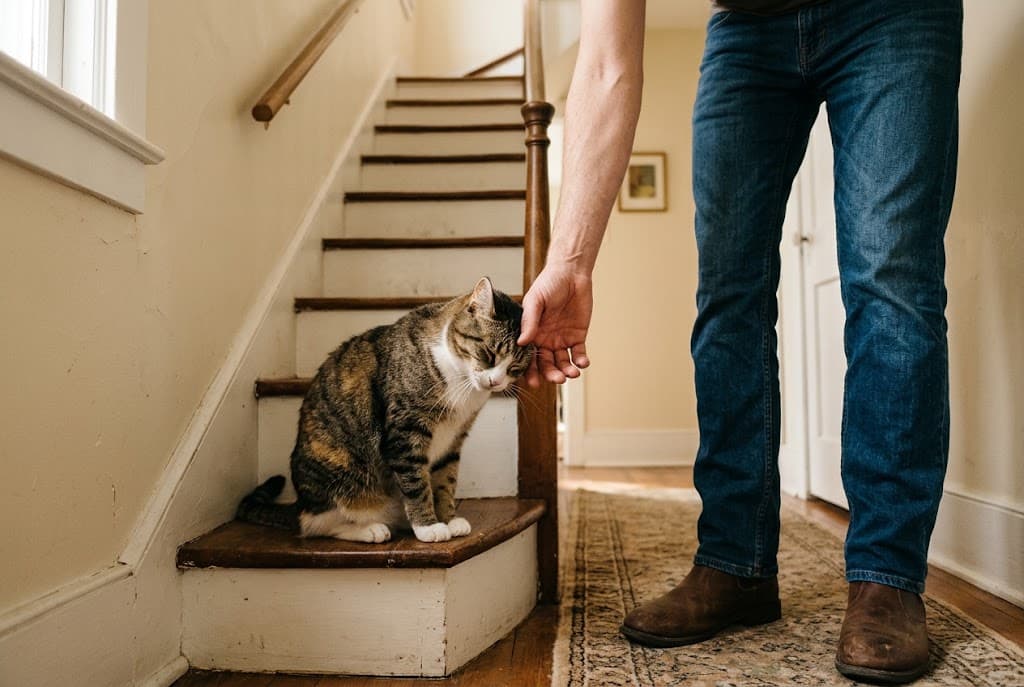
Use your own memory, not this scene. If your cat usually stayed upstairs, or your dog waited for you to approach, that difference matters.
Select Review and read the proposed memory carefully. If it accurately reflects what you remember, choose Yes, that’s [Pet Name]. If it does not, choose Something’s not right rather than confirming a detail simply because it sounds affectionate.
For a fuller approach to choosing and describing real details, How to Keep Your Pet’s Memory Alive explores that separate task.
Ordinary chat does not automatically turn everything you type into a confirmed historical memory. Saving a Little Place Moment does not automatically add it to the AI companion’s memory, either.
Send something you would actually want to say
Return through Talk to [Pet Name], type in the message field, and use the send arrow or Enter.
You do not need a special prompt. A possible first message is:
I’ve finished what I needed to do today. Come sit with me for a minute.
That is a suggested message you could type, not a customer transcript or a promise of a particular response.
You can talk about the present. You do not have to begin with a memory test, explain your whole relationship, or find the most emotional sentence you can write.
Is there a free way to try it?
PetMemorium currently offers a standard Free plan. You can begin without providing payment-card details, but free does not mean unlimited.
The current allowances are:
- 30 Chats per account per UTC calendar month. They are shared across the pets on that account, not provided separately for each pet.
- One Chat is one completed ordinary text exchange: your message followed by a successfully saved AI reply. It is not an unlimited conversation session.
- Unused Chats do not roll over into the next month.
- 30 separate Interactions per calendar month are also included. Those are a different allowance, not another 30 ordinary text Chats.
If you use your available Free Chats, new ordinary chat messages pause. You can wait for the next monthly allowance or choose Plus for a higher allowance.
Plus currently includes 300 Chats and 300 separate Interactions per monthly paid period. It is a paid subscription, not a separate free trial. Check the current Plans & pricing and the allowance shown in your account before deciding.
There is no need to make that decision before you have understood what the experience is.
What if an AI conversation is not what I’m looking for?
If you want a genuine message from your deceased dog or cat, an AI service cannot provide that. A familiar-sounding response does not change its source.
You might instead want somewhere to say what remains on your mind, without receiving a generated answer. How to Write a Letter to a Pet Who Passed Away offers a private writing approach.
Or you might mainly want to collect photographs and stories. How to Create an Online Pet Memorial Page explains that different purpose. A space for preserving memories and an AI chat are not the same feature.
You can choose one, both, or neither.
If trying a conversation feels uncomfortable, you can stop. You do not need to keep using it to demonstrate how much your pet mattered. AI companionship is optional, and it is not grief treatment or a replacement for support from people you trust or qualified professionals.
Start with an honest expectation
Before your first message, you do not need to decide whether an AI companion will become part of your life.
You only need a clear understanding of what you are trying: a generated, text-based interaction that can draw on real details you choose to share.
It will not be the dog or cat who once heard you moving around the kitchen. It cannot recover the life you had together.
But if you are curious about a memory-shaped conversation, the first sentence does not have to be remarkable. It can be as ordinary as the things you used to say.
You can try it without asking it to be a return.