Pet Memorial Quotes: Words for the Little Things You Miss
By PetMemorium
- Published:
- Last updated:
You’re ready to write their name. It’s the next line that stops you.
You might be adding a caption to a photograph, beginning a private note, or choosing words for a small collection of memories. You know what your pet meant to you. Finding a sentence that sounds right is something else.
The pet memorial quotes below offer a starting point: a few words for missing them, and more specific lines about the life you shared. You can use a line that fits, change it, or let it help you find your own.
These original examples are written from an owner’s point of view, not taken from real owners’ accounts. Keep only the details that were true of your pet.

When you only need a few words
A short sentence can say something honest without explaining the whole relationship.
“Your name still comes up when we talk about home.”
“I miss having you to tell the small things to.”
“Remembering you means remembering how we spent an ordinary day.”
The first line might suit a shared collection of family memories. The second is more private: something you could write directly to your pet without explaining it to anyone else.
Choose the voice that feels comfortable. You can write about them, write to them, or simply place their name beside a sentence. None requires a public tribute or a polished account of their life.
For the dog whose little habits you miss
After your dog has passed away, a broad description such as “wonderful companion” may feel accurate but unfinished. It doesn’t quite hold the way they moved through your day.
A line can keep something smaller: a familiar weight, a sound, a particular part of a walk.
“You carried the leash for the last few steps, as if you were bringing both of us home.”
“I miss the weight of your chin on my knee while I finished one more thing.”
“I remember the soft thump of your tail before you were quite awake enough to get up.”
“I can still picture your damp paws on the bath mat and the enormous shake I never quite stepped away from.”
These describe different kinds of closeness. One belongs to a shared outing. Another holds a quiet interruption. The bath-time sentence keeps an untidy moment without needing to make it grand.
Your dog may never have carried a leash or rested their chin on your knee. Leave those details behind if they don’t belong to them. The useful part is noticing what you would put in their place.
The sound before breakfast. The way they waited while you tied your shoes. Something you could recognize without seeing their face.
For the cat whose small choices you knew
Words for a cat can make room for the particular terms on which you shared a home: the contact they sought, the distance they preferred, and the little requests you learned to notice.
“You rarely sat on my lap. I miss looking up and finding that you’d chosen the room I was in.”
“I remember the small tug of your claws in my sweater, then the careful work of getting comfortable.”
“You had one brief sound for the closed door. I miss being the person who knew what it meant.”
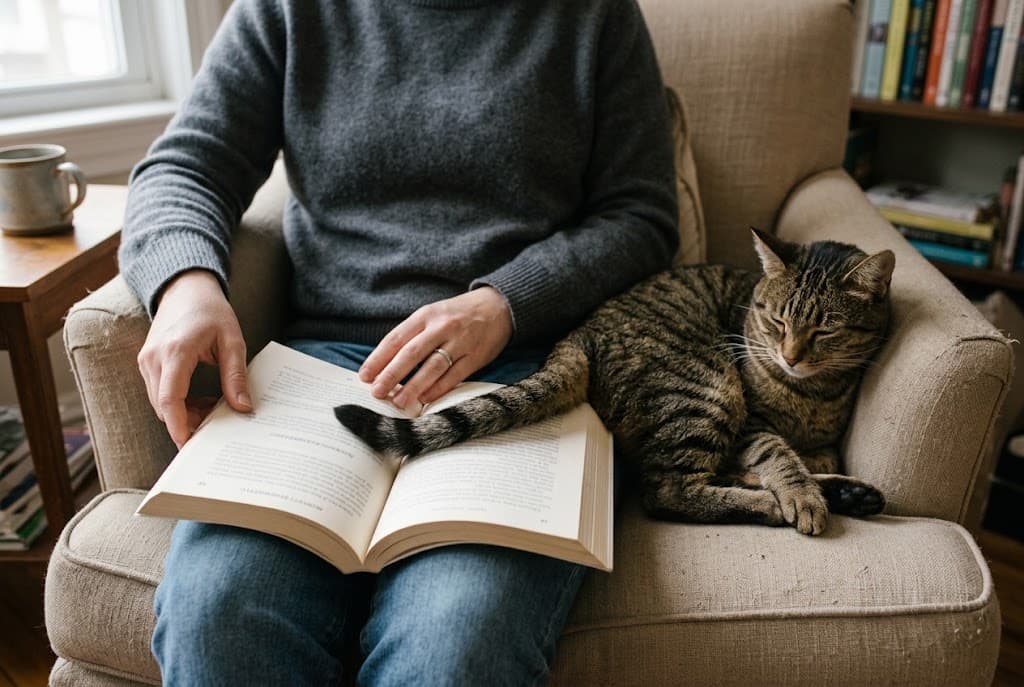
“You stepped over the open book and left your tail across the sentence. I would leave it there again.”
A cat didn’t have to be constantly affectionate to be familiar company. If yours preferred the other end of the room, that distance can belong in the words you choose.
You also don’t have to make a small habit stand for something larger. A tail across a page can remain a tail across a page. It may already say exactly what you miss.
Words for the life you shared—not only its ending
A memorial sentence can describe an ordinary part of being together. It doesn’t have to return to the day your pet died.
These lines leave room for the routines, personality, and shared understanding that came before:
“I want to remember the days that were so familiar I never thought to describe them.”
“We had our own small ways of telling each other the day was done.”
“When I tell your stories, I want to keep the stubborn parts, too.”
There is room for an inconvenient habit in a loving memory. You can remember the pet who refused a new bed, interrupted a task, or had a very particular idea about when dinner should happen—if that was genuinely them.
A sentence does not become less caring because it includes a little resistance or untidiness. You are describing someone you knew, not trying to give them a flawless character reference.
How can I make a line sound like my pet?
Keep the part you recognize, then replace anything that could belong to almost anyone.
Here is an invented editing example. Begin with:
“I miss our evenings.”
Then add the action that made those evenings yours:
“I miss the weight of your chin on my knee while I tried to finish the crossword.”
The sentence becomes more personal through one remembered detail. It doesn’t need a stronger adjective.
For your pet, the detail might be a pause before jumping up, a nose beneath your hand, or the sound they made when you stopped brushing. Use the movement or sound you actually remember, rather than whichever example seems most touching.
Read the line aloud. Would you say it that way to someone who knew them? If a word feels too formal, change it. If “always” is more certain than your memory, use “sometimes,” or describe one occasion instead.
You can also stop before the sentence feels complete. A private note can hold uncertainty: you remember the habit, but not when it began. You remember a sound, but can’t describe it exactly.
If you have a memory but no picture to go with it, Remembering My Cat Without Photos: What Can I Keep? offers a separate guide to preserving details without filling gaps with invented ones.
Choose the words for where you’ll keep them
The same memory can need different amounts of explanation in different places.
Beside a photograph
Let the words add what the picture cannot show.
If the photograph already shows your dog beside you, a caption could name what happened there: waiting while you finished a task, listening for a familiar sound, or settling down after a walk.
You don’t need to describe everything visible in the image. Choose the detail someone looking at it would otherwise miss.
In a private note
You can use a nickname, an unfinished phrase, or a reference only you understand.
There is no need to introduce your pet or explain why a particular morning mattered. A note written to them can sound like you. It doesn’t have to sound like something suitable for everyone else to read.
If you want to write more, keep the short line at the top and let the story continue underneath it.
In a shared remembrance
Give other readers enough context to meet the pet you are describing.
Their name and one specific habit may be enough. You can use “I” for your own memory without assuming everyone in the family remembers the same moment in the same way.
Ask before including someone else’s private words or story. And if you would rather keep the whole piece to yourself, you can.
For ideas about where these words might live—a photograph, a small story collection, or something tangible—Dog Memorial Ideas: Choosing a Way to Remember Them explores those choices without requiring a purchase.
One sentence can leave room for the rest
Read the line you’ve chosen once more.
Does it sound like something you want to say? Is there a detail in it that belongs to the pet you knew?
If not, you can leave the caption unfinished. Try a plainer word. Keep the memory and put the writing aside.
The words do not have to sound timeless. They can sound like an afternoon you remember very well.
Their name is already there.
The next line can be small enough to be true.