Pet Loss Poems for the Ordinary Life You Shared
By PetMemorium
- Published:
- Last updated:
You might be looking for words you can read quietly, without having to explain the whole story first.
A poem about losing a pet can begin somewhere ordinary: an afternoon outdoors, water falling into a sink, or a story that still makes someone laugh.
The four original pet loss poems below offer different places to begin. There is a poem for a dog, one for a cat, a short poem about a shared memory, and one about finding laughter in a story you still want to tell.
These poems were written for this article. Their scenes are imagined, not accounts from real pet owners. Each is told in a person’s voice, remembering a pet who has died.
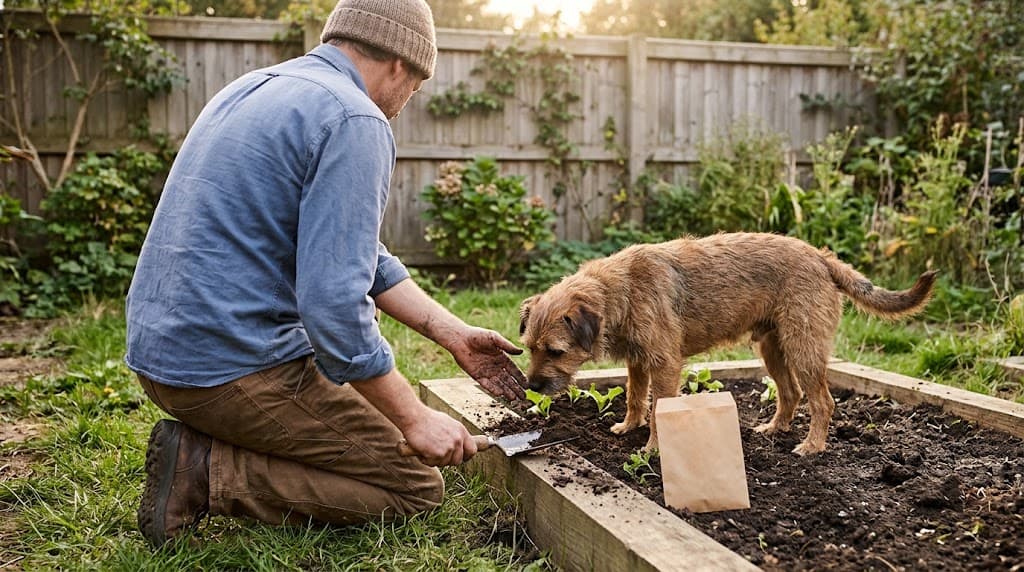
Remembering the dog who kept you company
Beside the Garden Bed
I would make a small hole
in the loosened soil.
You would put your nose in it
before I found the seed.Your nose against my wrist,
the trowel paused in my other hand—
we made very little progress
on afternoons like that.Now I finish a whole row
before the light moves off the fence.
The packet folds shut.
The tools go back.I miss the work
we never got done,
and the cool, insistent nose
that made me stop.
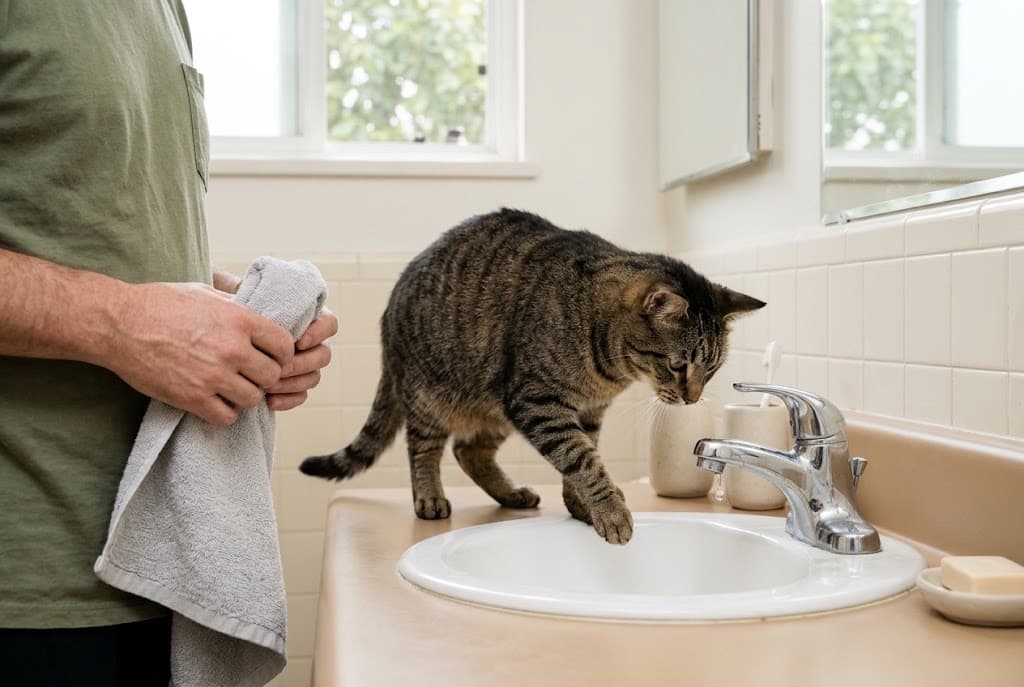
Missing a cat’s particular curiosity
The Last Drop
One drop gathered at the faucet.
You lowered your head to inspect it.A paw rose,
careful and much too late.
The drop fell.
You looked into the basin
as though it might return.I stood with the towel
waiting in my hands.There were mornings
when I hurried you.
There were mornings
when I stayed.Now I turn the water off.
The pipes settle.
I remember how still you could be
for something so small.
A short poem for the “we” in your stories
We
I said we
and almost corrected myself.But you were there,
nose in the open suitcase,
checking each shoe
before I could pack it.So I let we
stay in the story.
When a story makes you laugh—and miss them
The First Picture
We were talking about
the time you sneezed
just as the picture was taken.Someone tried to copy the sound.
It was a terrible impression.
I laughed before I thought to stop.For a moment
we were all back there,
trying to get everyone
to look the same way.Then I missed you
in the middle of the laughter.I let the story finish.
There was more to tell:
how we took another picture,
and kept the first one, too.
Let a real memory find its own rhythm
Begin with a small piece of action you actually remember, and give it enough space to unfold.
For example, if your cat used to investigate grocery bags, you could follow the sequence: the rustle of a handle, the long sniff, then the decision to climb into one particular bag. This is a possible scene, not a detail to borrow unless it belongs to your cat.
Write the moment in plain sentences first. Then notice where the action slows. A line break can leave space for a pause; a longer line can carry the busy, untidy part. Try arranging the words a few ways and see which feels closest to the moment.
Rhyme is optional. Familiar words may suit the memory better than language you would never use at home.
You can finish with something you notice now, or let the poem end inside the remembered scene. A poem about your pet does not need to summarize their life, explain their death, or reach a reassuring conclusion.
Leave anything you cannot remember unwritten. A true fragment can belong in a poem without being made into a complete account.
If you need something other than a poem
If you want a single line for a photograph or a private note, Pet Memorial Quotes offers a separate collection of original short expressions.
For the practical parts of a difficult day, How to Cope With Pet Loss, One Ordinary Day at a Time offers everyday suggestions about necessary tasks, decisions that can wait, and asking for help.
Choose the poem that feels nearest to what you wanted to say. You may want to keep all of it, or return only to the scene you recognize.
A pet’s life can be remembered through more than its ending. There were afternoons when nothing important seemed to be happening, and you were together.
There was a whole life before you needed a poem for it.