A Letter From Your Dog After They Passed Away: Imagining What They Might Say
By PetMemorium
- Published:
- Last updated:
You may know what you would say to your dog. What you miss is the other side of the exchange: the interruption, the expectant look, the particular way they asked you to join them.
An imagined letter can give those familiar details words on a page. It cannot tell you what your dog truly thought or deliver a message from them after death.
The letters below are original fiction written for this article. They are not messages from deceased pets or examples of PetMemorium chat.
You do not have to make a letter solemn for it to mean something. If your dog was impatient about a toy, particular about their space, or wonderfully inconvenient, there can be room for that, too.
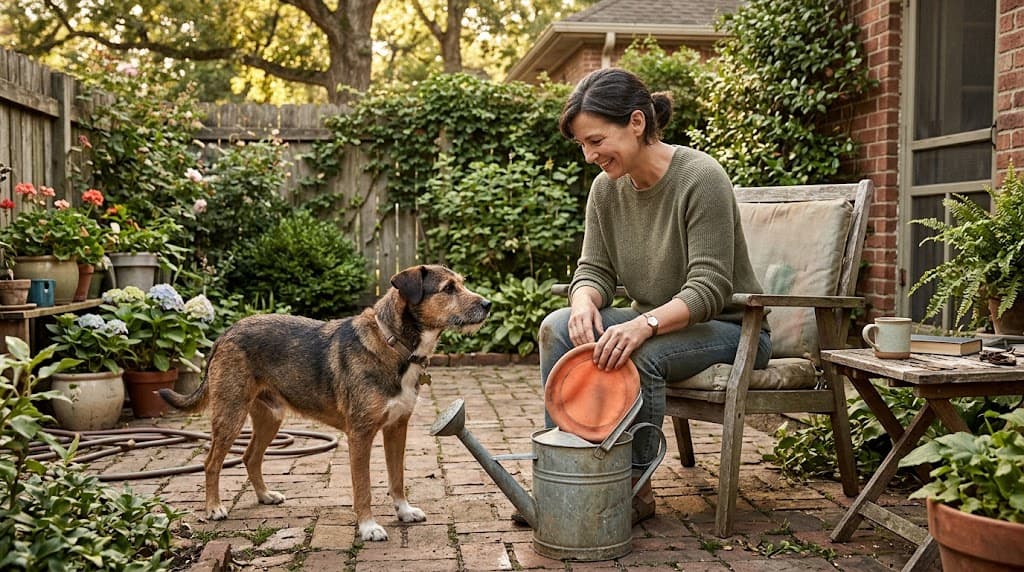
An imagined letter from a playful dog
Original fictional writing example. Bram, Alex, and every event in this letter are invented. These are imagined words, not a message from a deceased dog.
Dear Alex,
First: the orange fabric disc.
Not the new one. The one with the wavy edge. You kept putting it on top of the washing machine, as if I didn’t know where it was.
I would stand in the doorway and look at you, then at the machine, then back at you. You were usually very good at that game.
Outside, you would hold it behind your back. I would check one side. Then the other. By then my front paws were doing small impatient steps on the patio.
You laughed before you threw it.
I wasn’t much for returning it neatly. Sometimes I brought it all the way to your hand. Sometimes I stopped just out of reach. Once, I dropped it straight into your empty watering can. You tipped the can upside down, and out it fell. A very good extra part of the game, although you seemed surprised.
Afterward I would drink, walk back to your chair, and press the wet edge of the disc against your knee.
You said we were finished.
I checked.
Eventually I would stretch out across the back step. You had to turn sideways to get past me. I would lift my head just enough to see where you were going.
That is the afternoon I’d put on this page: you laughing, the disc where it shouldn’t be, and me not quite convinced we were finished.
Love,
Bram
The letter does not try to explain death or solve the person’s sadness. It stays with an ordinary exchange: asking, playing, interrupting, and eventually settling nearby.
That may be closer to what you want to recognize than a page of advice spoken in a dog’s name.
Let their habits set the pace
A personal imagined reply needs more than a different name at the bottom.
Begin by considering what repeatedly drew your dog’s attention—and what they actually did about it. Did they make their request immediately? Wait nearby? Try again in a different way? Lose interest once something more interesting happened?
Those observations can guide your writing choices. They do not reveal the exact sentences your dog would have said.
In Bram’s fictional letter, short interruptions and a small joke suit the invented dog’s persistent interest in a game. A quieter dog’s letter might leave more space between moments and ask less of the reader.
| Behavior in these fictional examples | A possible writing choice |
|---|---|
| Bram repeatedly returns with the disc and tries to restart the game. | Quick changes of attention, short sentences, and gentle humor. |
| Fern approaches slowly, accepts a little attention, and sometimes settles farther away. | An unhurried rhythm, fewer requests, and attention to quiet details. |
These are literary choices, not personality tests. A dog can be lively outdoors and quiet at home. You can write about one familiar side of them without making it a description of every day they lived.
A quieter imagined letter
Original fictional writing example. Fern, Jordan, and every event below are invented. This is imagined writing, not a message from a deceased dog or a product-generated reply.
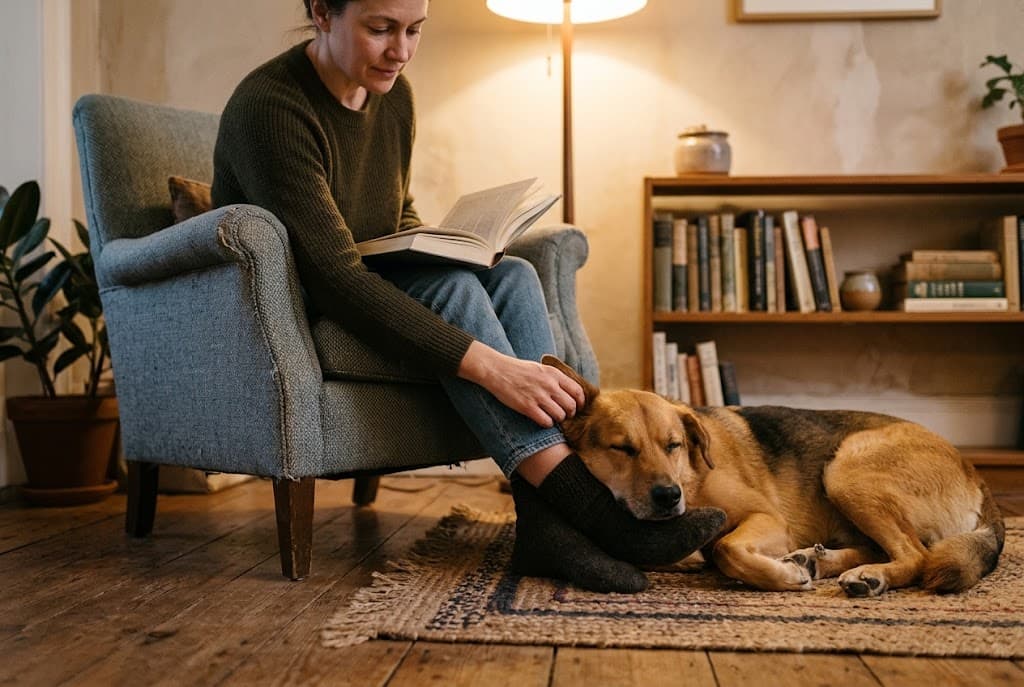
Dear Jordan,
Before I came over, I usually made a slow circle around the room.
You would be reading. I would pass your chair, pause beside the low shelf, and come back. Then I would rest my chin on your ankle until your hand reached down.
One ear first. The other, if you were still paying attention.
I didn’t always stay right beside you. Sometimes I chose the rug a little farther away. When you shifted in the chair, I lifted my head. When you settled again, I did too.
There was a small squeak in that chair. A page would turn. Your mug would touch the coaster.
Some evenings, that was most of the conversation.
If I borrow a few words for this letter, I would use them for that: the room growing dim, your hand resting nearby, and no special reason for us to be together.
Love,
Fern
Fern’s letter does not need Bram’s joke or his insistence on another throw. Its closeness comes from a different rhythm.
Your dog’s version might be less tidy than either example. There might be an interruption halfway through a tender moment, or a preference that made sense to nobody but them. You do not have to remove those details to make the writing affectionate.
Borrow the viewpoint—not somebody else’s dog
Put the examples aside before making your own version.
Changing Bram’s name would still leave you with Bram’s invented life. Your dog may never have touched a flying disc or cared whether someone was reading.
Choose a behavior you genuinely remember. Then decide how you, as the writer, want to give that moment an imagined first-person perspective.
Keep a separate note of the real detail. The action belongs to your memory; the wording you build around it belongs to your imagination.
If a color, sound, or sequence is unclear, leave it out. You do not need to invent a missing detail to make the paragraph work. How to Keep Your Pet’s Memory Alive offers a fuller approach to recording what you know without filling the gaps.
As you revise, ask whether the letter could fit almost any dog. If it could, replace one broad declaration with a particular exchange you recognize. The aim is not to make the dog sound wiser. It is to make the scene feel less interchangeable.
You can also shorten the letter. One recognizable paragraph may suit what you want to write better than a complete page.
What should an imagined reply leave unanswered?
A letter does not need to supply answers you do not have.
Be careful about giving your dog words that judge a medical decision, grant forgiveness, describe what dying felt like, or tell you how you must feel now. Writing those words cannot establish that your pet understood or believed them.
You can acknowledge a wish for reassurance without turning that wish into your dog’s testimony.
The same distinction applies to an afterlife. You may hold your own beliefs, but an imagined letter cannot verify where your dog is or whether they are sending a message.
And if the writing does not feel right, you can stop. You do not owe your dog a fictional voice. If you would rather speak in your own, How to Write a Letter to a Pet Who Passed Away explores that different direction.
The letter can end with an ordinary moment
You do not need to finish with a lesson about loss.
The last line could stay beside the toy, the chair, or the small pause before your dog came closer. You can let the imagined scene stop without making it promise anything.
Keep the piece with a clear label, such as “An imagined letter, written by me.” That leaves room for the feeling without confusing it with a message you received.
It can remain private. You can reread it, revise it, or put it away.
What you are looking for may not be a grand statement. It may be the particular impatience of a dog who had brought the toy back again, or the quiet approach of one who preferred to wait.
When you write from your own memories, the words are imagined.
The ordinary life you are remembering was real.